
Start with the essentials / Field guide 04
Power and Energy During an Outage
An energy plan keeps the important parts of daily life working when electricity stops. Start with the tasks that protect health: operating essential medical equipment, receiving alerts, keeping needed medicines within their required temperature range, lighting a safe path, and contacting help. You do not need to power every room or appliance. A smaller plan that you have tested is more useful than a large system you do not understand.
Compare bundles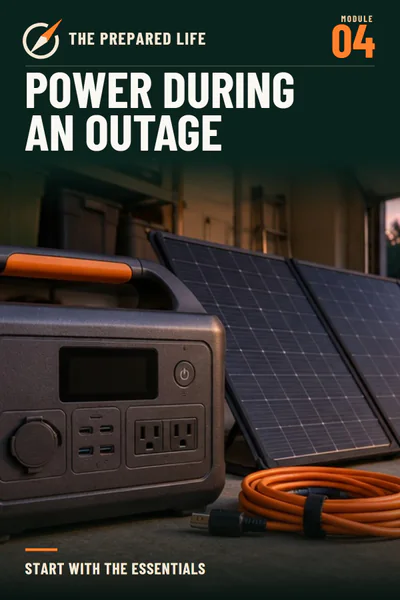
- Decide what must keep working
- Understand watts and watt hours
- Build a simple battery and lighting plan
- Use a generator without bringing exhaust inside
- Treat renewable power as a planned system
- Set a limit for staying home
Included with your guide
10 checklist actions, a printable topic exhibit, a downloadable PDF, and official references.
A look inside
Decide what must keep working
Make a list of the people in your home and the equipment each person needs. Ask the equipment provider or care team what to do if an essential medical device loses power. Write down the backup runtime, charging method, and place to go before that backup runs out. Do this before an emergency; a power station is not a substitute for a medical continuity plan.
Divide other equipment into three groups: essential now, useful later, and optional. A phone, radio, and headlamp usually need much less electricity than a space heater or electric cooker. A refrigerator needs a separate estimate because its motor starts and stops. Plan food safety with Chapter 5 rather than assuming a powered refrigerator will always be available.
Explore the free starter guide →