
1. Name the needs you must cover.
Write down everyone your plan supports, including pets. Note medicines, mobility, communication, feeding, and care needs. Keep private medical information in a secure place that the right caregiver can access.
2. Choose your contacts and meeting places.
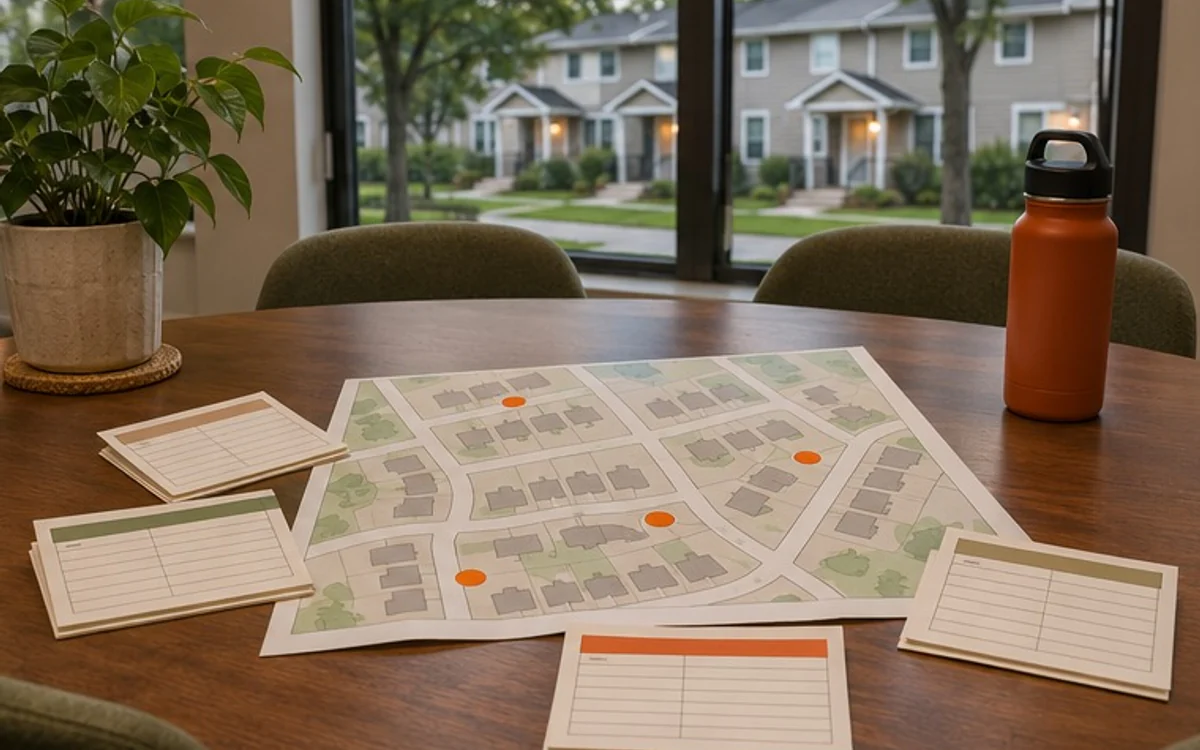
Pick one meeting place close to home and one outside your neighborhood. Ask a trusted person outside the area to be your check-in contact. Write names and phone numbers on paper as well as keeping them on your phone.
3. Look at the essentials you already have.
Check drinking water, food you can eat without cooking, a manual can opener, flashlights, spare batteries, medicines, and basic first-aid supplies. Set aside a small amount each week to fill the most important gaps.
4. Decide when you will leave.
Identify a safe destination and two possible routes. Include transportation, pets, and the needs of anyone who requires help. Follow official evacuation instructions. Do not wait for supplies to run out before acting on a threat.
5. Practice one small part.
Find the flashlight in the dark. Call your check-in contact. Walk to your meeting place. After the practice, write down what was hard to find or understand and change the plan.
A useful action today
Put your contact list and meeting places on one page. Make a copy for each responsible adult and keep a copy with your emergency supplies.
Where should you start?
This short self-check helps you choose a topic. It does not measure or certify your safety.
Use trusted local information.
Follow emergency instructions for your location. In the United States, call 911 for an immediate emergency. For household planning, start with Ready.gov and your local emergency-management office.
Adults remain responsible for emergency decisions and hazardous tasks. No guide can guarantee survival or replace hands-on training.