
Build lasting resilience / Field guide 17
Storage Cellars and Emergency Shelter
A storage cellar and an emergency shelter have different jobs. A cellar may help store certain foods. A storm safe room is designed to protect people from a specific wind hazard. A shelter for another threat needs its own design. An underground room is not automatically safe for people, and a room that stores vegetables is not automatically a storm shelter. Start with your local risks and your household's needs before choosing a building project.
Compare bundles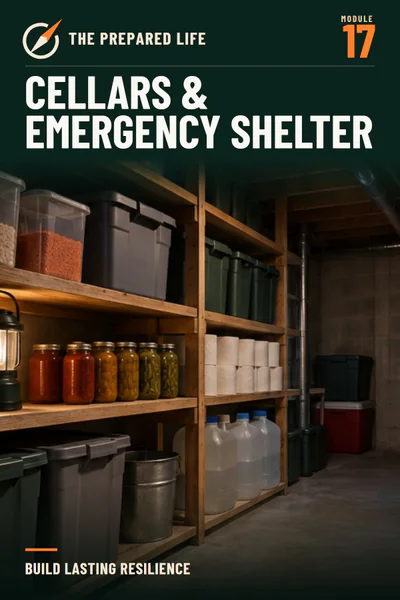
- Name the problem you want to solve
- Use professional design for occupied structures
- Understand a storm safe room
- Plan food storage as a separate task
- Make the space usable in the dark
- Inspect and practice
Included with your guide
10 checklist actions, a printable topic exhibit, a downloadable PDF, and official references.
A look inside
Name the problem you want to solve
Write one sentence describing the need. Examples are keeping a harvest in suitable storage conditions, reaching a nearby tornado safe room, or finding an accessible place to wait during a short outage. A project cannot be judged until its purpose is clear.
List who would use the space. Include babies, older adults, people using mobility equipment, service animals, and pets where applicable. Ask how each person will reach the entrance, use the door, sit safely, receive alerts, and leave afterward. A narrow ladder may rule out a location even when the space below looks large.
Explore the free starter guide →